







Search Results for: foreign exchange reform

Ethiopia Launches Exchange Rate System Reform, Birr Depreciates by 30% in a Single Day, Coffee Exports Face a New Landscape
On July 29, 2024, the National Bank of Ethiopia announced a major overhaul of the country's foreign exchange system, effective immediately, centered on introducing a competitive exchange rate formation mechanism based on market supply and demand. This move was seen as a key step toward resolving the country's long-standing foreign exchange shortage, but it also quickly triggered a sharp currency depreciation—the birr plunged about 30% against the US dollar in a single day. As a major global coffee-producing region, how will this policy shift in Ethiopia affect its coffee industry and the international coffee market? This article will outline the specifics of the reform, the exchange rate movements, and their potential transmission effects on coffee exports and prices. [more…]

Birr exchange rate falls for three consecutive days to 83.94, Ethiopia's foreign exchange reform triggers a chain reaction in prices and coffee exports
Since Ethiopia implemented a new foreign exchange policy on July 31, the birr has fallen three times in a row against the US dollar within just a few days, dropping to 83.94 birr per US dollar on August 2, sharply increasing the pressure on local people's livelihoods. The Addis Ababa City Trade Bureau promptly sanctioned 387 businesses suspected of price gouging, while opposition parties criticized the timing of the reform as inappropriate. At the same time, exports of agricultural products such as coffee have gained competitiveness in the short term due to currency depreciation, but climate disasters, the Red Sea shipping crisis, and domestic conflict cast a shadow over the long-term outlook. This article will sort out the deeper impact of exchange rate fluctuations on Ethiopia's economy, prices, and coffee industry, and also look at how brands such as Front Street Coffee are responding amid changes in the place of origin. [more…]

Ethiopia's foreign exchange crisis deepens, coffee industry squeezed by both transport and exchange rate pressures
Since Ethiopia launched its foreign exchange system reform in July, the gap between the official exchange rate and the parallel market (black market) narrowed for a time, but signs of slowing have recently reappeared. As of mid-October 2024, the official exchange rate was 116.97 birr per US dollar, while the black market rate was as high as 140 birr, forcing businesses to take desperate risks amid the foreign exchange shortage. Costs are climbing for import-dependent enterprises, and inflationary pressure is transmitting to the coffee industry, driving up cultivation costs and pushing the minimum selling price across the board up by 2%. At the same time, the government is accelerating the opening of the logistics industry, attempting to ease transport bottlenecks by bringing in foreign investment, but port access and regional security remain uncertain factors. This article will sort out the chain reaction among exchange rates, logistics, and coffee exports. [more…]

Ethiopian Birr exchange rate continues to fluctuate, coffee exports may face pressure to slow down
Recently, a document regarding the design of Ethiopia's new banknotes circulated on social platforms, drawing outside attention to the trajectory of the country's currency, the birr. Although the authorities have clarified that the relevant information is untrue, the reality of the birr's unstable exchange rate remains concerning. Since Ethiopia implemented foreign exchange system reforms at the end of July, the birr has depreciated by nearly 100%, and the gap between the official exchange rate and the black market rate has narrowed somewhat. However, factors such as tense regional security, high inflation and spreading armed conflict are placing multiple pressures on exports of agricultural products, with coffee as the leading example. Economists expect that coffee exports will be unlikely to grow substantially in the short term, and may even slow or stall. [more…]

Ethiopia's Coffee Export Pricing Shifts to a Floating Mechanism, Green Bean Prices May Rise
The Ethiopia Commodity Exchange is implementing a brand-new pricing method for green coffee exports. From now on, green coffee prices will be calculated weekly by referencing Arabica futures on the New York ICE Intercontinental Exchange and the real-time exchange rate of the Commercial Bank of Ethiopia. This change is expected to allow local coffee farmers to share in more of the benefits, but it also faces a dual test from international futures volatility and the EU's EUDR regulations. The new mechanism applies only to commercial coffee beans, while specialty coffee is not included for the time being. Front Street Coffee will continue to follow developments in producing regions and bring first-hand information to enthusiasts. [more…]

Escalating Internal Conflict in Ethiopia Brings a New Round of Price Increases at Coffee Origins
The conflict between Fano forces and government troops in the Gojjam region of Ethiopia's Amhara State continues to intensify, with the Fano side vowing to retaliate against the government army's atrocities against civilians. This civil war has not only caused heavy casualties but also led to an economic blockade and soaring prices in the region. Meanwhile, Ethiopia's foreign exchange reform has triggered a sharp depreciation of the exchange rate, and the Red Sea shipping crisis has driven up import and export costs. Under these multiple pressures, the country's coffee cultivation costs are steadily rising, and the floor price for coffee exports has consequently been raised. As a major global coffee-producing region, Ethiopia's turbulent situation is profoundly affecting the international coffee market. [more…]

Ethiopia's Central Bank Narrows Foreign Exchange Bid-Ask Spread to 2%, Bringing Good News for Coffee Exporters
On October 15, the National Bank of Ethiopia introduced a new regulation capping the spread between the buying and selling rates for foreign exchange transactions at 2%, effective the following day. This marks another significant adjustment following the country's shift to a market-based exchange rate system in July of this year. Previously, the birr depreciated sharply, and the bid-ask spread at one point exceeded 10 birr, placing heavy pressure on exporters. The new policy requires banks to disclose all fees transparently, which is expected to reduce exchange losses for exporters and bodes well for major export commodities such as coffee. Nevertheless, Ethiopia still faces multiple challenges, including the conflict in Amhara region, the Red Sea blockade, and the port dispute with neighboring Somalia. [more…]
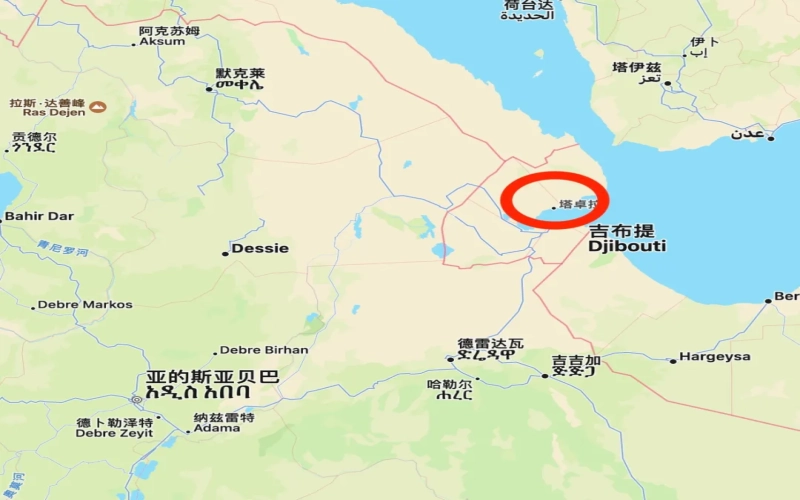
Djibouti Opens Tadjoura Port to Ethiopia—Can Coffee Exports Break Through?
As a landlocked country, Ethiopia has long depended on the Port of Djibouti for its imports and exports. Recently, Djibouti announced that it would grant Ethiopia full management rights over the Port of Tadjoura, a move seen as an opportunity that could ease the difficulties Ethiopia faces in exporting coffee and other agricultural products. However, Ethiopia's relations with Somalia have continued to deteriorate over the Somaliland memorandum of understanding, and the involvement of Egypt and Eritrea has made the situation in the Horn of Africa even more tense. At the same time, armed conflict is spreading within Ethiopia, the currency is depreciating, and coffee export volumes have fallen by 27%, leaving the industry's prospects full of uncertainty. Although the Port of Tadjoura offers a glimmer of hope, the port is still located in the Gulf of Aden, within the range of Houthi attacks, and whether it can truly be effective remains to be seen. [more…]

Ethiopian armed conflict spreads to western coffee regions, hidden concerns emerge behind record exports
Oromia, Ethiopia, has recently seen a string of kidnappings and armed attacks, and the conflict has spread to the Lekanti coffee-producing area in the west and the town of Asela near the Sidama-producing area. Meanwhile, the country's coffee exports in August hit a record high, with export value rising sharply year on year. However, multiple factors—continued conflict, currency depreciation, and the impending implementation of the EU's deforestation regulation—have filled the prospects for Ethiopia's coffee industry with uncertainty. This article reviews the course of events and the impact on the industry for coffee lovers' reference. [more…]
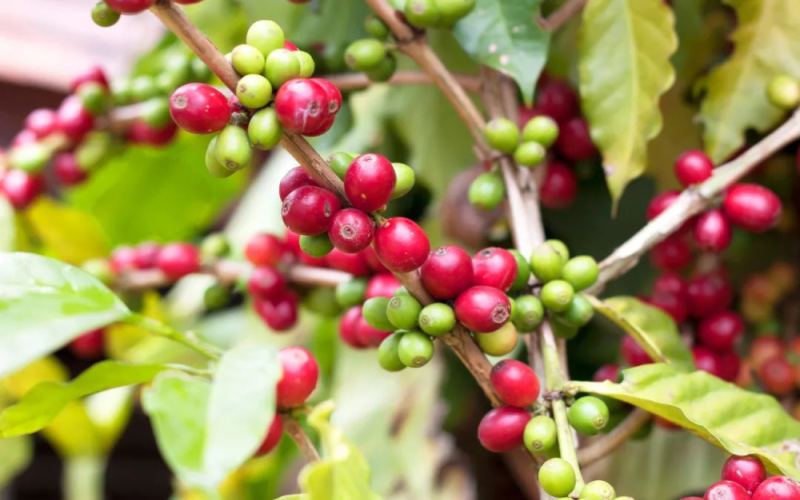
Yunnan small-bean Catimor coffee: full analysis of variety origins, cultivation history, and flavor characteristics
Yunnan arabica coffee has frequently been crowned with the title of "world-class" in recent years—just how much basis is there for this claim? This article examines the question from three dimensions: variety origins, cultivation history, and cup profile. The small-bean coffee predominantly grown in Yunnan is in fact Arabica, and over ninety percent of current production is Catimor—a hybrid variety that excels in disease resistance and high yield, yet has long borne the reputation of mediocre flavor. The article traces the complete arc from the first coffee tree in Zhukula Village in 1904, to systematic trial planting in Baoshan's Lujiangba in the 1950s, to Nestlé's introduction of Catimor in the 1980s that drove industrial expansion. It also explores Yunnan's current situation and challenges in washed processing and cultivation techniques, and introduces Front Street Coffee's practice of establishing its own estate in Lincang, managing the entire process from breeding to green beans, along with pour-over parameters and flavor descriptions for Front Street Yunnan small-bean everyday coffee, for coffee enthusiasts' reference. [more…]
What position does Yunnan coffee hold among global origins, and which brands' Yunnan beans are worth buying?
Yunnan is famous for Pu'er tea, but it also produces coffee beans that are increasingly popular among young people. Coffee cultivation in China can be traced back to 1904, while large-scale cultivation in Yunnan began only after the 1950s, going through three stages of development. From the initial procurement of Typica and Bourbon varieties to repay Soviet debts, to Nestlé's promotion of the Catimor variety, and then to the introduction of the specialty coffee concept after 2000, Yunnan coffee is gradually moving toward refinement. Today, producing regions such as Baoshan, Pu'er, Xishuangbanna, Dehong, and Lincang each have their own flavor expressions. Front Street Coffee established an estate in Lincang, planting the elegant Typica variety, and welcomed its first harvest in 2021. This article will sort out the development thread of Yunnan coffee and introduce the flavor and brewing parameters of Front Street Yunnan Natural Typica. [more…]
Yunnan Coffee Varieties and Flavor Analysis: Is Arabica Really Catimor?
Yunnan coffee has attracted much attention in recent years, but many people still have questions about its varieties and flavors. This article sorts out the three waves of coffee cultivation in Yunnan, from its introduction to its rise, with a focus on explaining the relationship between Catimor and Typica, as well as the origin of the name "Yunnan small-bean coffee." At the same time, Front Street Coffee has established its own estate in Lincang to grow Typica, using sun-drying processing and medium roasting, presenting citrus, berry, and caramel sweetness. Whether you are new to Yunnan beans or want to gain a deeper understanding of their varietal evolution, this article can provide a clear professional perspective. [more…]

A Complete Analysis of Rwandan Coffee Regions: Gaseke Bourbon's Washed Processing and Flavor Code
In the African specialty coffee landscape, beyond Ethiopia and Kenya, Rwanda has risen rapidly in recent years thanks to its impressive performance at the Cup of Excellence. This landlocked country, known as the "Land of a Thousand Hills," enjoys volcanic soil and high-altitude advantages, shaping a clean and bright flavor profile through Bourbon-lineage varieties and washed processing. In this article, Front Street Coffee will guide you through Rwanda's coffee-growing conditions, the development trajectory from the colonial period to the NAEB reforms, the characteristics of Bourbon varieties and the washed process, and share the roasting and pour-over parameters for Front Street's Rwanda Red Bourbon and Giseke coffee beans, so we can together experience the terroir flavors of berries, citrus, and nuts interwoven. [more…]

A Complete Guide to Jamaican Blue Mountain Coffee: Typica Variety, Grade Classification, Regional Terroir, and Pour-Over Flavor Guide
Blue Mountain coffee is hailed as the gentleman among coffees, and is one of the most classic and legendary coffees. This article will start from the cultivation history of Jamaican Blue Mountain coffee and systematically sort out its varietal characteristics, washed processing techniques, Jamaica's coffee grading system, the microclimate and volcanic soil advantages of the Blue Mountain region, as well as the signature flavor performance of Blue Mountain coffee. At the same time, combined with the example of Front Street Coffee's Blue Mountain No. 1 pour-over, it shares specific brewing parameters and taste experience to help coffee lovers fully understand the past and present of this legendary coffee. [more…]

Ethiopia Deploys 40,000 Troops to Crush Fano Insurgents, Coffee Industry Faces Dual Test of Costs and Exports
The Ethiopian federal government has recently deployed approximately 40,000 additional troops to the Amhara region, launching a new large-scale military operation against Fano armed forces. Intense clashes have erupted in multiple areas, disrupting urban transportation and leaving residents trapped in their homes. The conflict has lasted for over a year, causing heavy casualties and severely impacting local agricultural and livestock production as well as logistics and transportation. As a major coffee-producing country in Africa, Ethiopia is facing multiple challenges, including currency depreciation, rising cultivation costs, and compliance pressure from the EU Deforestation Regulation (EUDR). This article will review the latest developments in the conflict and their potential impact on the coffee supply chain. [more…]

Major adjustment to Starbucks Rewards points rules: the number of stars needed to redeem a free coffee will increase.
Starbucks plans to make major adjustments to its Starbucks Rewards membership program in February 2023, with the redemption thresholds for most items set to rise, while only a few iced drinks will require fewer stars. This change has sparked widespread discussion among consumers, while Starbucks says the move is intended to maintain the long-term sustainability of the Rewards program. As one of the most successful membership programs in the world, Starbucks Rewards has a huge and active user base, and changes to its points rules touch the nerves of many coffee lovers. This article will sort out the details of the adjustment, member reactions, and the brand's official response, and review the program's development history and recent innovative attempts. [more…]

The Coffee Gem of Central America, Guatemala: A Complete Flavor Analysis of Seven Major Producing Regions from the Highlands of Huehuetenango to Classic Antigua
Guatemala, a Central American country whose name means "land of forests" in Mayan, is not large in territory, yet thanks to its volcanic soil, varied climate, and high-altitude environment, it has become the world's eighth-largest coffee producer. This article will take you through the history and grading system of Guatemalan coffee, analyze the seven major specialty regions one by one, and focus on the two star origins: Huehuetenango and classic Antigua. You will experience the signature floral notes, bright acidity, and bittersweet chocolate of Front Street Guatemalan coffee, as well as Antigua's unique "volcanic smokiness," while also learning how the choice of roast level affects its flavor expression. [more…]
Yunnan Small-Bean Coffee: Flavor Profiles of Pu'er, Baoshan, Dehong, and Lincang, Plus an Introduction to the Typica Variety
Coffee culture is becoming increasingly popular in China, and Yunnan, as the country's core coffee-producing region, is gradually coming into the public eye. The film "Coffee or Tea?" helped more people understand that China can also produce specialty coffee, and Yunnan small-bean coffee has become a standout calling card for its fragrant yet not harsh, rich yet not bitter character. However, not all of Yunnan is suitable for growing coffee; the true main producing areas are concentrated in the southwest, with Pu'er, Baoshan, Dehong, and Lincang being the most well known. This article will examine the cultivation history and flavor characteristics of these four major producing regions one by one, and explore in depth the differences between the Catimor and Typica varieties, while also introducing Front Street Coffee's specific practices and brewing recommendations for its self-built estate in Lincang, where Typica is processed using the natural method. [more…]

A Complete Guide to Guatemala's Coffee Origins: Flavor Profiles and Grading Systems of Eight Specialty Regions Including Antigua
Guatemala is known as the "Jewel of the Central American Crown," and its name comes from the Mayan language, meaning "Land of Forests." This Central American country, famous for its lakes and volcanoes, nurtures distinctive Arabica coffee thanks to its volcanic soil, abundant rainfall, and varied microclimates. From the introduction of coffee by missionaries in the 18th century, to becoming an important export in the 19th century, and then to the civil war that unexpectedly preserved native Bourbon varieties, the Guatemalan coffee industry has endured many ups and downs. Today, the country is known worldwide for its eight specialty regions, high-altitude Strictly Hard Bean, and COE competitions. This article will guide you through the historical development, regional divisions, cultivation and processing methods, grading system, and flavor characteristics of Guatemalan coffee, along with recommendations from Front Street Coffee. [more…]
Analysis of the Effects and Taste of Yunnan Small-Bean Coffee: Can Specialty Black Coffee Help with Weight Loss?
Yunnan, a province renowned for Pu'er tea, is now also a major coffee-producing region in China. From the first coffee seedling planted by a French missionary, to Catimor becoming the dominant variety, and then to the transition toward specialty coffee, Yunnan coffee has gone through a century-long journey. This article will guide you through the origin advantages, variety evolution, and flavor characteristics of Yunnan Arabica coffee, and explore the fat-burning and health benefits of specialty black coffee. Meanwhile, Front Street Coffee's experience of growing Typica in Yunnan also presents the story behind a cup of Yunnan coffee. [more…]